Meet DoctorX: a family physician who went into the Deep Web, ran into the Dread Pirate Roberts, and the strange cascade of bewildering events that followed.
The intersection between the Internet and drugs is a subject of great interest to me, and I have devoted a large part of my professional life to exploring it. My first academic publication was a review of the effects and risks of MDMA. I was able to go through more than 200 original papers from my home computer in the Erowid archives. It was 2002, and until then reading a single scientific paper meant a tedious round of paperwork at the university library. My next publication was an analysis of attitudes, beliefs and opinions about that same substance (MDMA, ecstasy), drawn from a Spanish online discussion forum.
My interest in MDMA (not only professional) led my friends to start calling me "DoctorX". I liked the nickname because it had a superhero quality to it. So I began using the pseudonym in my popular articles, on Internet drug forums, and in my work as medical adviser to Energy Control, a Spanish NGO at the forefront of harm reduction in recreational drug use.

One of the first pieces of DoctorX merchandise, made by fans
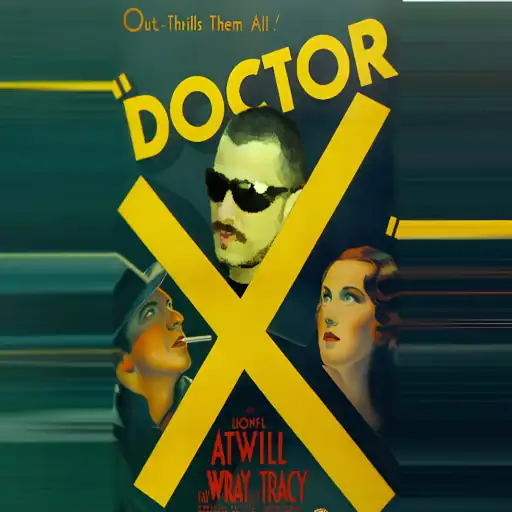
"Dr X’s Clinic" (Energy Control website, 2010)
A season in the cryptomarkets of the Deep Web
In the autumn of 2012 I made my first digital foray into Silk Road Marketplace, the platform I had heard about and which was supposedly a safe way to buy controlled drugs. I quickly had the sense that this was something genuinely revolutionary, with the potential to transform drug trafficking in the same way MP3s had transformed the music industry.
As I explored the market, what struck me was the vibrant online community of almost 100,000 people from all sorts of places, actively taking part in discussions about drugs and related questions.
So in April 2013 I registered under my usual alias, "DoctorX", and opened a thread on the Silk Road forum called "Ask an expert doctor about health and drugs". I had done this before, though never in English nor in a setting like that one. That thread turned out to be a turning point in my career. I had no idea that the answers to my questions and the connections I would make through it would take me down genuinely unexpected paths.
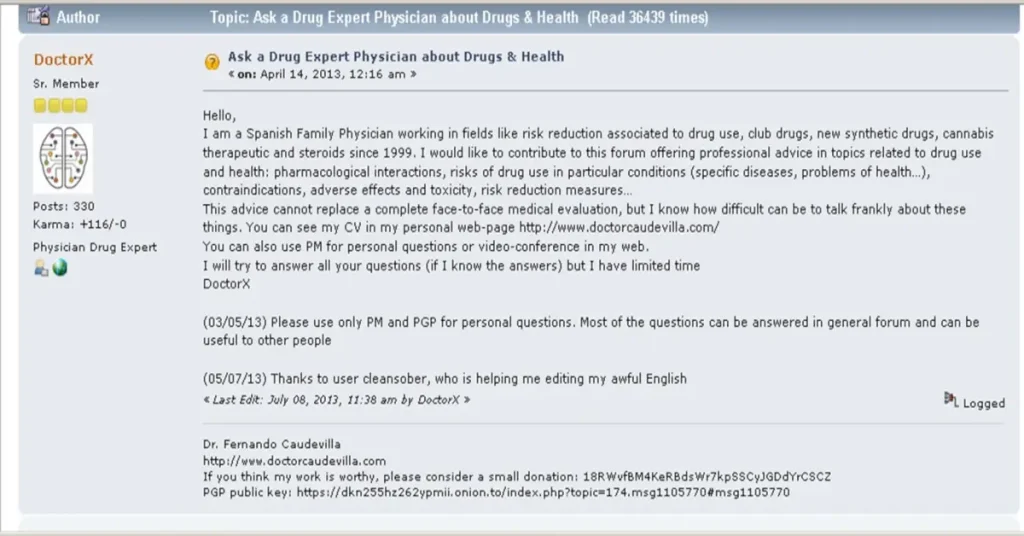
DoctorX’s first message on the Silk Road forum, offering an online drug information service (April 2013)
Within a few weeks, questions began to pile up about adverse effects, the potential risks of combining certain drugs and medicines, drug interactions and patterns of use. The initiative was well received by the community and won the approval of Dread Pirate Roberts, the enigmatic figure behind Silk Road.
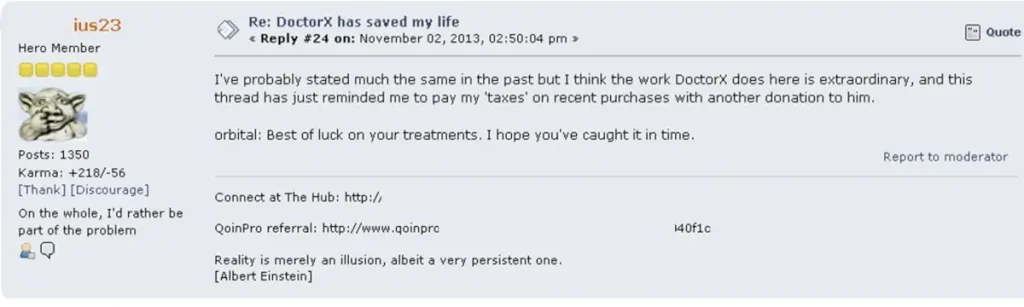
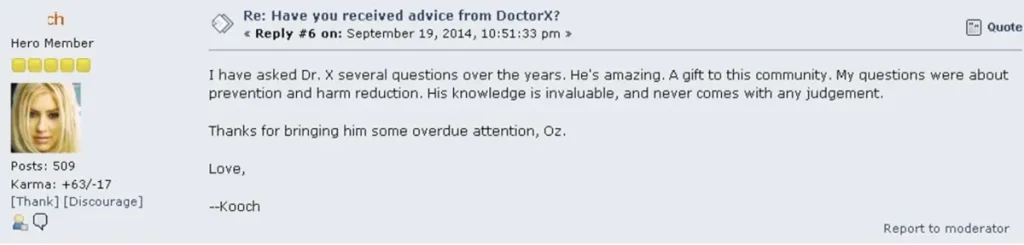
Messages from Silk Road forum users commenting on DoctorX’s work (2013–14)
The thread was featured on the forum and on the Silk Road marketplace itself. It stayed active until October 2013, when the FBI shut Silk Road down and arrested Dread Pirate Roberts. Two weeks later the team building Silk Road 2 got in touch with a proposal to carry on my work. At the end of 2014 I started threads on Evolution Marketplace and The Hub. Over a period of two years, the DoctorX threads drew more than 130,000 views and answered more than 900 questions. In the DoctorX Files section there is an improved and updated version of the original questions.
The Despicable Doctor, the Furious Judge and the Dread Pirate (Roberts)
By 2015 DoctorX was a known figure in the Deep Web’s virtual drug communities. What is most surprising is the interest my work had by then generated in parts of the international press. I have always taken every request, because there was nothing illegal about my work and, from the outset, the link between DoctorX and my real identity was plain. Things got complicated, though, halfway through that year.
On 2 May 2015 the lawyers for Ross Ulbricht, a 28-year-old American accused of being the brain and administrator behind Silk Road Marketplace, contacted me. The defence team wanted to bring in evidence about harm reduction and asked for my testimony, alongside leading researchers in the field of drugs and the Internet such as Professor Monica Barratt and Mr Tim Bingham.
I agreed, and with the help of Mr Ulbricht’s lawyers I drafted a sworn statement within a few days. I also provided a copy of the public Silk Road forum thread "Ask an expert doctor about drugs and health" and answered all the further questions put by Judge Katherine Forrest, including those about my private conversations with DPR.
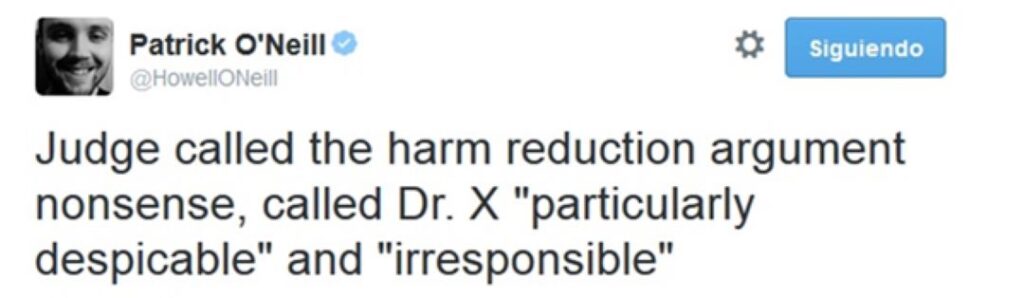
The first reactions to my testimony reached me through the press. The judge had reacted with "anger and fury", and adjectives such as "enabler", "despicable" and "irresponsible" recurred in most of the press coverage of the trial.
At first I thought it was a misunderstanding, or a misreading. I changed my mind in October that year, when the full text of the sentencing was made public. That was when I discovered that my testimony had been deliberately distorted, and that ten of the eighty-five pages were given over to insulting me, ridiculing me and accusing me, without evidence, of crimes I had never committed.
DoctorX on Tour
Fortunately for me, my harm-reduction work was received differently in academic and scientific circles. A few months before the trial I was invited to the Cryptomarkets Working Group of the European Monitoring Centre for Drugs and Drug Addiction, and published some results of my work in this monograph.
The Drug Policy Alliance had invited me to speak about harm reduction in cryptomarkets at the 2015 International Drug Policy Reform Conference in Washington, but I gave the presentation from Madrid, by video link, since their lawyers strongly advised me against setting foot on American soil.
Between 2014 and 2019 I have taken part in international conferences run by scientific societies, public institutions and NGOs in Italy, Belgium, Switzerland, Portugal, Germany, Ireland, Slovakia, Austria, Argentina, Colombia and Malaysia.
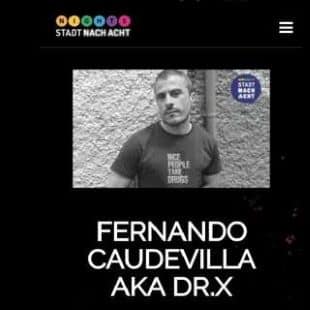
Is he a Doctor or a DJ (Berlin, 2017)
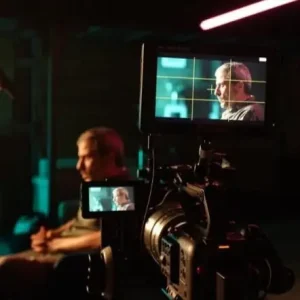
Psychedelic lessons (Bratislava, 2018)

Infodrog.ch (Lucerne, 2019)
Mientras tanto, también tuvimos tiempo de publicar algunas investigaciones en revistas científicas internacionales revisadas por pares
-
Horton-Eddison M, Shortis P, Aldridge J, Caudevilla, F (2021) Drug cryptomarkets in the 2020s: policy, enforcement, harm, and resilience. Swansea: Global Drug Policy Observatory. Policy Brief 16
-
Quintana P, Ventura M, Grifell M, Palma A, Galindo L, Fornís I, Gil C, Carbón X, Caudevilla F, Farré M, Torrens M. The hidden web and the fentanyl problem: Detection of ocfentanil as an adulterant in heroin. Int J Drug Policy. 2017 ;40:78-83
-
Caudevilla, F., Ventura, M., Fornís, I., Barratt, M. J., Vidal, C., Lladanosa, C. G., Quintana, P., Muñoz, A., & Calzada, N. (2016). Results of an international drug testing service for cryptomarket users. Int J Drug Policy. 2016; 22:38-41
-
Caudevilla F The emergence of deep web marketplaces: a health perspective. In: The internet and drug markets (European Monitoring Centre for Drugs and Drug Addiction: Insights 21) Publications Office of the European Union, Luxembourg 2016
-
Vale Pires C, Caudevilla Gálligo, F, Valente, H. . Netreach Work: Implementing Web-based Harm Reduction. Interventions with Online Drug Users. Adiktologie 2016; 2: 182-187
DoctorX & his Chemical Brothers and Sisters
The bruising experience with the American justice system, and a run of strange events that followed (break-ins at my office, threatening messages by phone and email), led me to step back from this line of work, at least for a while. But the potential for prevention and intervention in the cryptomarkets kept hold of me, and I soon found another way in.
I was medical adviser to the NGO Energy Control from 2001 to 2020. One of Energy Control’s strengths lies in its drug checking service, where users can send in samples by post or hand them in at nightlife venues, to find out what their substance contains, remove toxic contaminants and receive personalised support and advice.
In 2014 we started a small pilot project to take that service to the Deep Web drug cryptomarkets. In 2015 we set up the International Analysis Service, with DoctorX as a well-respected figure in the cryptomarket communities. Together with the professionals and volunteers at the testing laboratory, we became known as "DoctorX and his Chemical Brothers and Sisters".
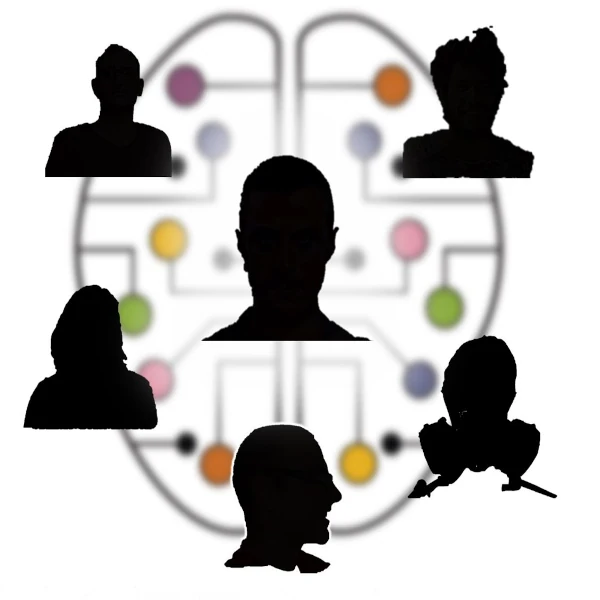
Early concept-art for DoctorX and his Chemical Brothers and Sisters
In September 2016 we launched the EnergyControl International website, devoted to testing substances bought on cryptomarkets. From April 2014 to December 2019 we analysed a total of 5,879 samples.
That information let us issue a number of alerts. These alerts are circulated specifically on cryptomarket forums and other potentially affected online communities, which avoids the risk of needless media hysteria.
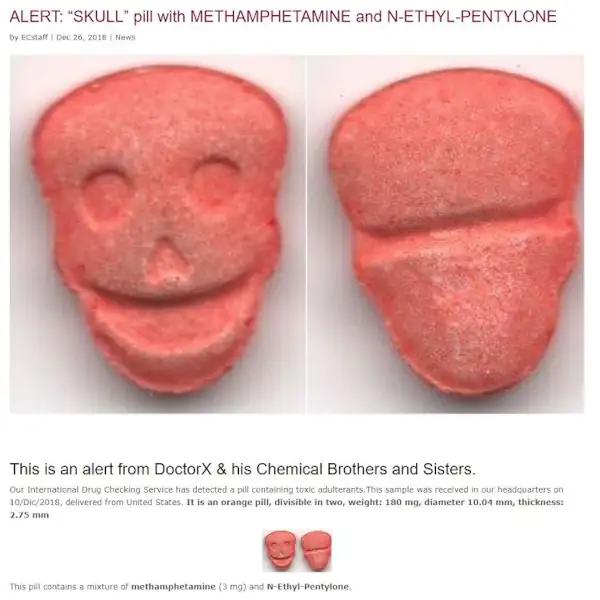
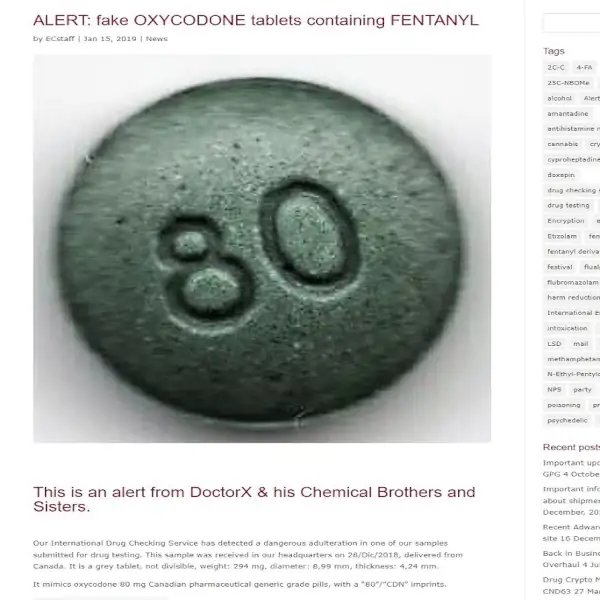
To my mind, the most consequential thing our heroic team of cybernauts did was to detect 11 samples of heroin adulterated with fentanyl or its derivatives, all bought on European cryptomarkets between 2016 and 2018.
The presence of these highly potent opioids raised a serious public health concern, given that between 10 and 30% of such drugs in the United States are contaminated with them.
That online vendors in Europe were distributing these dangerous products was alarming, and our team took two important steps.
First, we published a technical report. We felt it was important to alert the relevant sectors at once and, rather than go through the long process of publishing a scientific paper, we circulated our first and only technical report over the Internet.
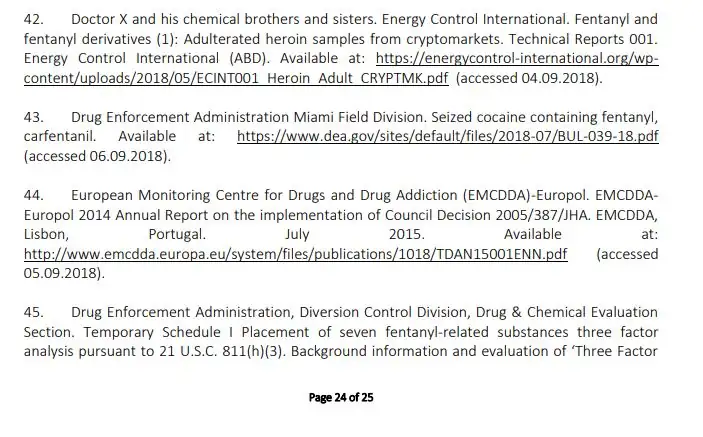
The report had a significant impact and was cited in official United Nations reports, credited to "DoctorX and His Chemical Brothers and Sisters". We are proud that our work held to rigorous scientific standards while still finding room for humour and pop culture references.
On this occasion we tried a different strategy. Through the users, we obtained information about the vendor and the market selling the adulterated products. We notified the vendors through the markets’ messaging systems, and two of them replied saying they had not known about the adulteration and undertook to destroy the contaminated batches. We were able to verify that they kept their word. The other two vendors did not reply, but the market administrators closed their accounts once we passed on the information.
We cannot establish how strong the relationship is, but we believe our interventions with vendors and administrators contributed, at least in part, to reducing the number of fentanyl listings on the market.
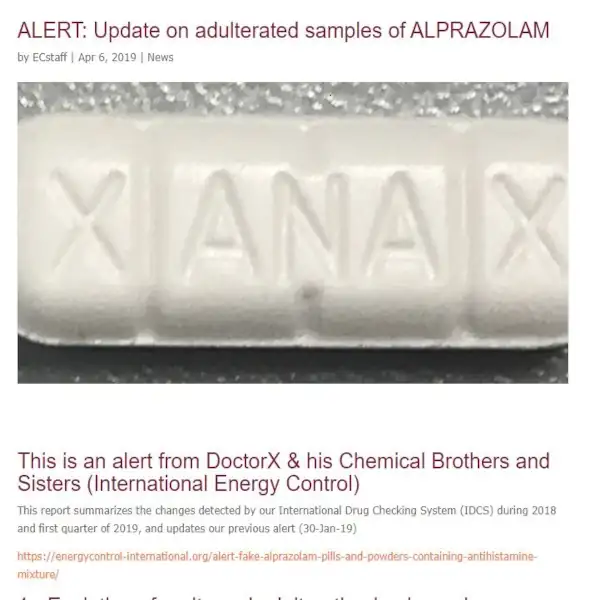
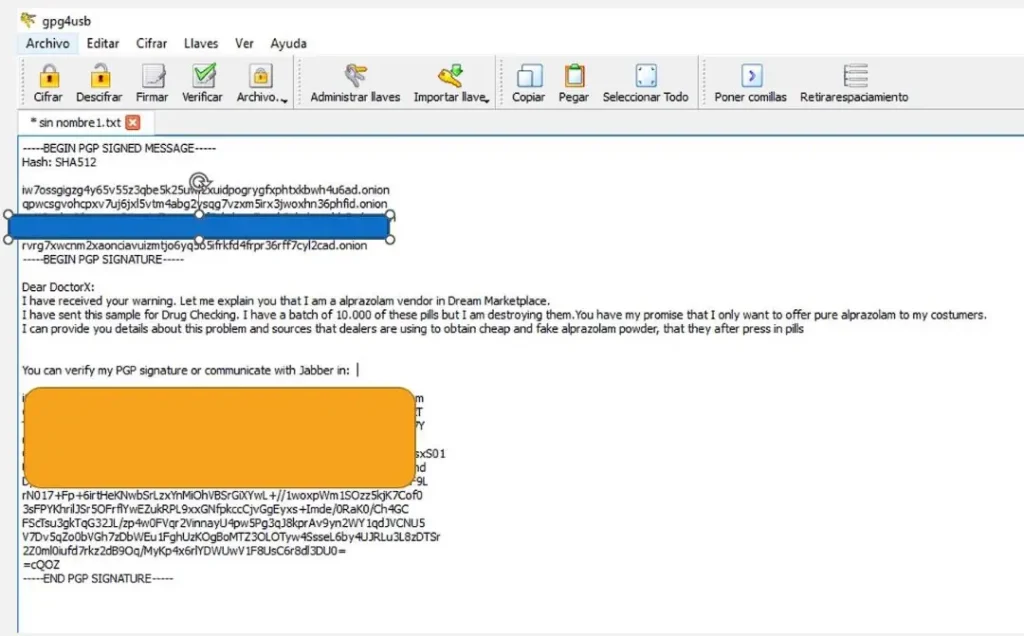
Another example, this time involving alprazolam, appears in the image below. On being told that his sample was adulterated, the user revealed that he was a vendor. He stated his intention to destroy the consignment of ten thousand similar products, and later provided very useful information for tracking the phenomenon. The example shows that not every drug vendor sets out to harm their customers. It is much like any other market — tomatoes, sardines or eggs.
A decade after they appeared, drug cryptomarkets have proved highly resistant to law enforcement. They are, in fact, likely to mean for drug trafficking and drug policy something like what the MP3 meant for the music industry.
Rather than spending enormous resources on the unrealistic goal of shutting them down, we need contemporary drug policies that put public health and human rights first. I had the chance to make that argument (including my work as an online medical consultant and our International Analysis Service) at the United Nations in March 2020. Treating cryptomarket vendors and administrators as potential harm-reduction agents drew surprised faces and reasoned criticism. But nobody insulted me or shouted "despicable" or "irresponsible" at me.
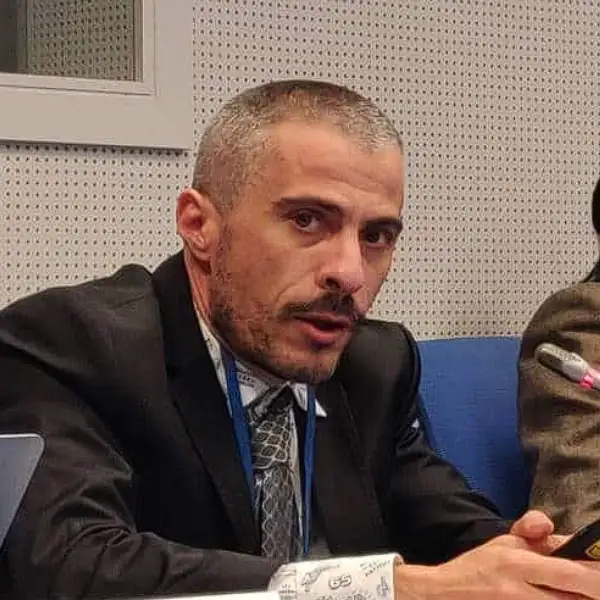
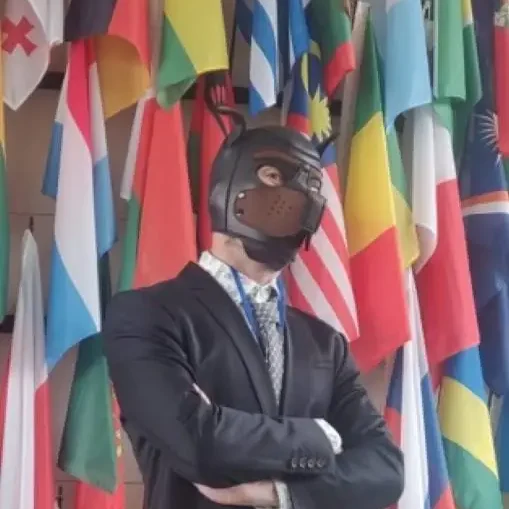
The following week, a virulent and malignant virus swept the planet. DoctorX spent the next two years treating patients at a primary care centre in Madrid. He also left the Energy Control International team, after the clash of egos that eventually turns up in every superhero group.
In early 2023 DoctorX returned to the Deep Web. He now moderates the Harm Reduction forum on Dread, the most active online community on the Deep Web, with more than 150,000 active user accounts. In April 2024 the writers José Ángel Mañas and Jordi Ledesma will take his adventures into novel form with "DoctorX: El médico de la Darknet" (Esfera de los Libros, 2024).